
Reading Time : 8-9 minutes
Your heart is asking for a quiet place to rest, and both doors are open!
Why So Many People Feel Confused About These Two
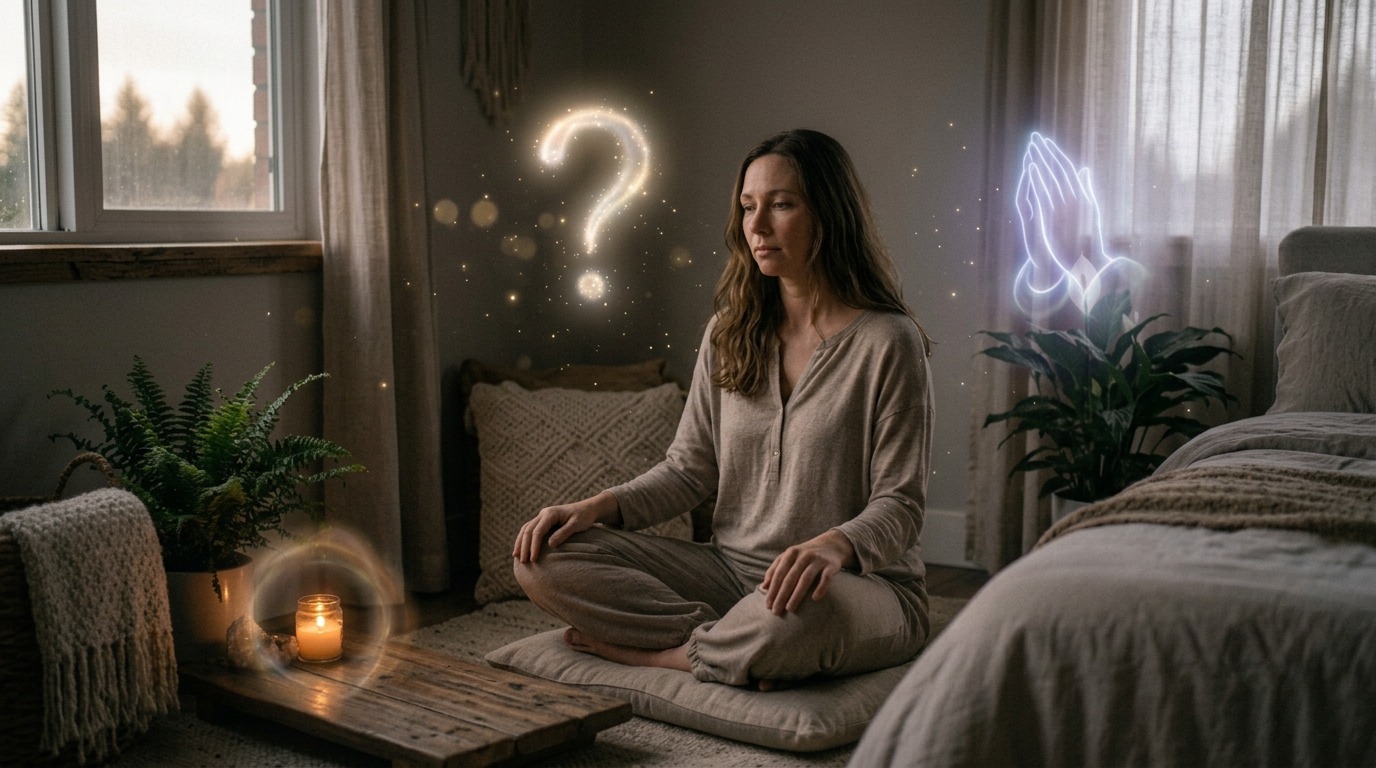
Sooner or later, almost everyone who walks a spiritual path asks the same question. A friend suggests prayer, a teacher talks about meditation, and a quiet voice inside wonders which one is really meant for you.
Some people close their eyes and feel nothing. Others sit down to pray and find their minds wandering to the grocery list. It is easy to conclude that you are doing something wrong.
You are not. Prayer and meditation are both ancient, both sincere, and both lead the heart toward something larger than the everyday self. They simply travel that road in different ways.
Understanding those differences can save you months of frustration and help you choose a practice that actually nourishes you, rather than one you feel you ought to do.
What Prayer Usually Looks Like
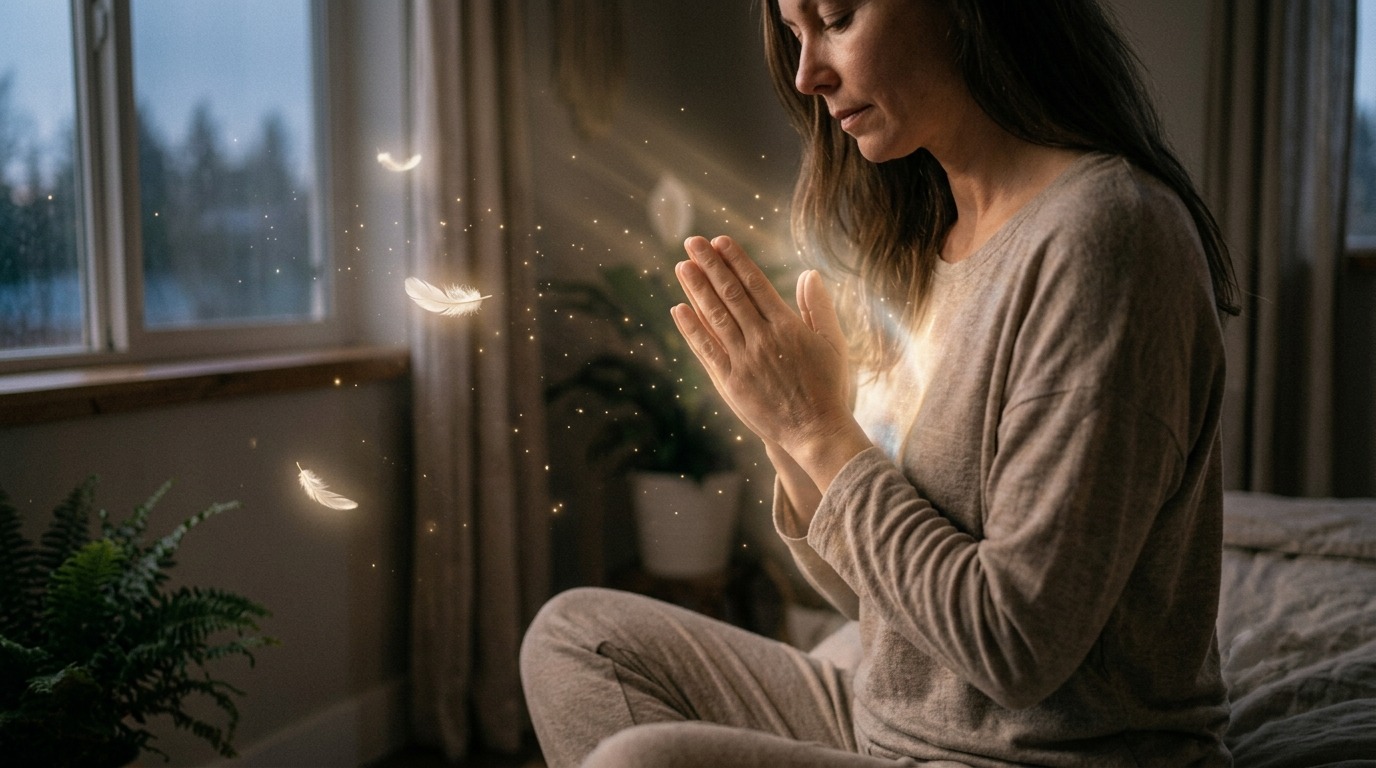
In most traditions, prayer is a conversation. You speak, you ask, you thank, you confess, you open your heart to a presence you trust. It might be few words whispered at bedtime, a formal recitation, or a long, tearful outpouring during a hard season.
Prayer gives your emotions a voice. When you feel grief, fear, or gratitude, prayer lets you bring those feelings directly to the Divine, the Angels, or the Source you believe in.
This is why prayer often feels deeply personal and relational. You are not just sitting in silence; you are reaching toward someone. Many people find that prayer brings comfort during loss, clarity during confusion, and courage during uncertainty.
If you have ever said “Please help me” from the bottom of your heart and felt a little lighter afterward, you already know the power of prayer.
If you want to see how this kind of reaching out works in practice, the post How to Connect with Angels: Step-by-Step Guide for Beginners walks through simple ways to open that channel of conversation.
What Meditation Really Asks of You
Meditation works in the opposite direction. Instead of speaking, you practice listening. You bring attention to your breath, a mantra, an image, or the sensations in your body, and you gently keep returning to that anchor whenever the mind wanders.
Over time, the noise begins to settle. Thoughts still arise, but they pass through you rather than pulling you along.
Meditation does not ask you to believe in any particular figure or to ask for anything. Its gift is presence. When the mind becomes still enough, you begin to notice things that were always there: the quiet strength beneath your worries, the wisdom that surfaces when you stop rushing, and the subtle nudges that guide you toward your next step.
Many people find that meditation makes them calmer, more focused, and more emotionally balanced, even on ordinary days.
For those who are curious about the energetic side of stillness, the post Aura & Chakra Scanning vs. Chakra Meditation explores how different inner practices can support this kind of awareness.
Talking vs Listening: The Heart of the Difference
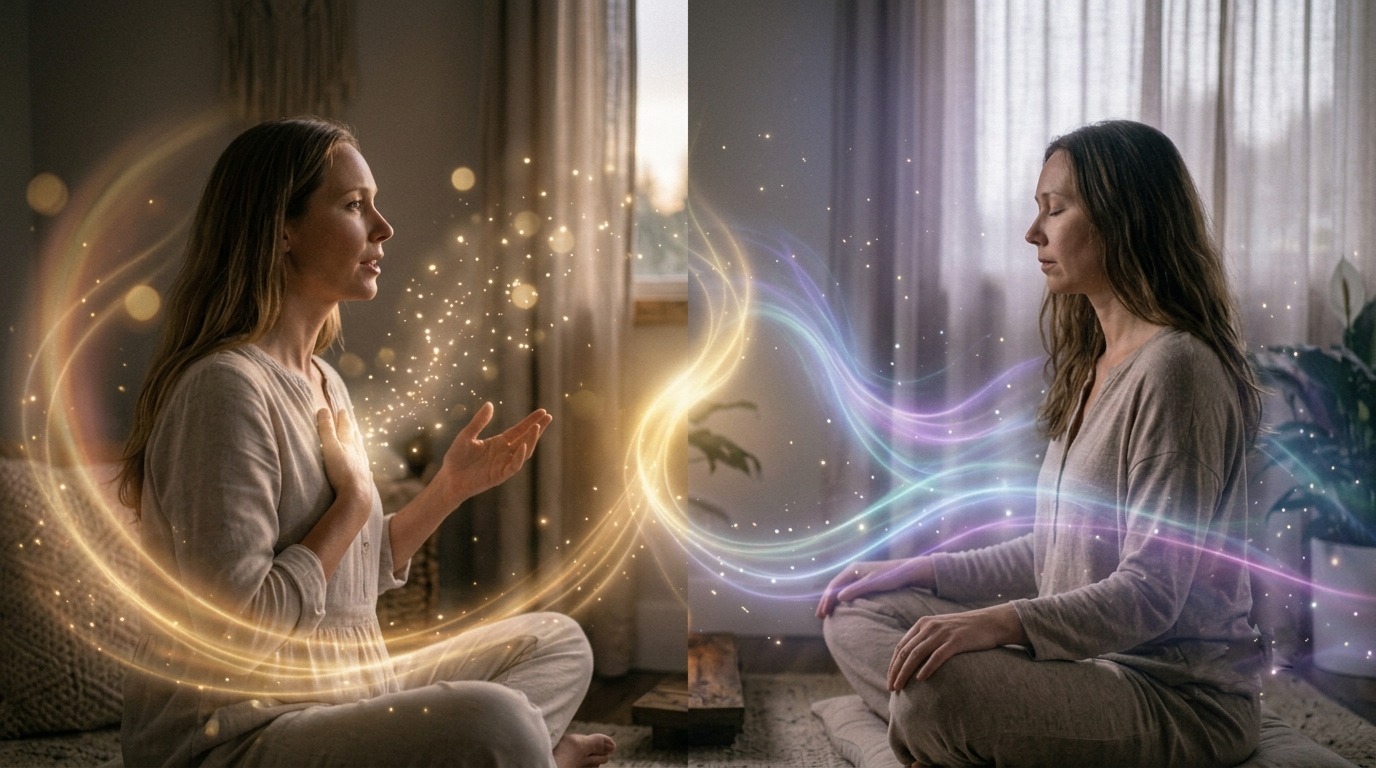
If you want one simple sentence to remember, it is this: prayer is mostly talking, and meditation is mostly listening.
Yet the line between them is softer than it sounds. A heartfelt prayer often ends in silence, and a deep meditation often ends with a feeling of gratitude that wants to be spoken aloud.
Think of prayer as the moment you pour your heart out to a dear friend, and meditation as the moment you sit beside that friend in comfortable silence, simply enjoying their company. Both are intimate. Both build trust. Both transform you, though they do it in different rhythms.
Some people feel most alive when they can name their needs and hand them over. Others feel most supported when they can stop trying to fix anything and simply rest in awareness.
Neither style is better. The question is which one helps you feel connected, honest, and at peace.
Which Practice Fits Your Season of Life
Your choice may change as your life changes. During a season of heartbreak, prayer might be the lifeline that keeps you going, because you need to say what hurts and ask for comfort.
During a busy season, meditation might be the gift that brings you back to yourself, even if it is only five minutes at dawn.
Ask yourself a few gentle questions:
- When you feel overwhelmed, do you want to talk to someone, or do you want to be quiet?
- Does your mind feel crowded with thoughts that need to be released, or does it feel scattered and in need of a center?
- Do you respond better to words, images, or silence?
Your honest answers will point you in the right direction more reliably than any rule.
Many people end up blending both. They begin the day with a short prayer of gratitude and close it with a few minutes of stillness. This is not a contradiction. It is simply a way of honoring both the voice and the listening ear within you.
How to Begin Gently This Week

Do not try to become an expert overnight. Choose one practice and give it a small, consistent space in your day.
- If you choose prayer, pick one moment, perhaps when you wake up or before sleep, and speak to your Angels or the Divine in your own words. Keep it honest and simple.
- If you choose meditation, sit comfortably for five minutes, breathe slowly, and when your mind wanders, return to the breath without judgment. Let the returning be the practice.
Be patient with yourself. Some days the words will flow easily, and some days the silence will feel heavy. Both are part of the path.
Over time, you will notice that you are becoming more grounded, more trusting, and more open to the guidance that has always been waiting for you.
Ready to go deeper?
If this post resonated with you, you may also enjoy How to Connect with Angels: Complete Guide, which brings together the many ways you can build a living relationship with your Angels, whether through prayer, stillness, or both.
You were not made to merely survive. You were made to be loved, to be guided, to flourish in ways that feel like miracles — because they are.
And it all begins the moment you decide, once and for all: I am enough. I have always been enough. And my Angels have known it all along.
If you truly want to understand how Angels work in your life… attract Money, heal Relationships, restore Health, grow Career, Inner Peace… begin now with 21 Days Angel Manifestation Bootcamp.
This is not just a course — this is a complete transformation journey!
Already 26,000+ students from around the world have become a part of this journey… If you feel like you arrived here for a reason… Maybe this is not a coincidence. Maybe this is your next step!
Frequently Asked Questions
Is meditation a form of prayer?
Not exactly, though many people experience them as connected. Prayer usually involves speaking to or asking a Divine presence, while meditation focuses on stillness and awareness. Many traditions weave the two together, and you can too.
Can I meditate if I find it hard to sit still?
Yes. Start with two or three minutes, use a gentle anchor such as your breath or a soft sound, and let returning to that anchor be the practice. Ease comes with repetition, not with perfection.
Do I need to believe in Angels to benefit from prayer or meditation?
No. Both practices can bring peace, clarity, and emotional balance on their own. If you do feel drawn to Angels, approaching them with an open heart can deepen the experience.
Which is better for anxiety, prayer or meditation?
Both can help. Meditation tends to calm the nervous system through steady attention, while prayer can ease anxiety by giving your fears a voice and placing them in trusted hands. Many people find a combination most supportive.
How long should I pray or meditate each day?
Consistency matters more than length. Even five minutes a day, practiced regularly, can make a meaningful difference over time. Increase gradually as it begins to feel natural.
What if my prayers feel unanswered?
Unanswered prayers often reveal a different kind of answer, one that arrives through timing, insight, or a shift in perspective. Keep showing up honestly, and notice the subtle ways your life begins to respond.